
Understanding Grief to Build More Human Care Systems

I recently had the chance to speak with Heather Straughter on her remarkable podcast A Place of Yes, which is available on Spotify and Apple Podcasts, and it was one of those conversations that stays with you.
We talked about grief, but not in the narrow way we often define it. Not just as something that follows death, but as something that moves through our lives in many forms. It shapes how we care, how we relate to others, and how we make meaning of what we experience.
What Grief Really Is
Grief is often described as a response to loss. That is true, but it is also incomplete. Grief can come from losing a loved one, but it can also come from losing a sense of stability, identity, or possibility. It can show up in moments of transition, in caregiving, in illness, in aging, and even in the quiet recognition that life is not what we thought it would be. Many of us experience grief multiple times over the course of our lives. Sometimes it is sharp and immediate. Other times it is slow, quiet, and ongoing.
What makes grief so complex is that it does not follow a straight line. There is no clear beginning, middle, or end. It comes and goes. It changes shape. It can sit just beneath the surface and then reappear when we least expect it. For many people, there is also a sense that grief is something to be managed or resolved, as if there is an endpoint we are meant to reach. But in reality, grief is something we learn to live with. It becomes part of who we are, and in some ways, it can deepen our understanding of ourselves and others.
In my conversation with Heather, I shared some of my own experiences with grief, from the experience of having a severe heart attack and its aftermath, to losing my parents over the last few years. What I have come to understand is that grief can be a teacher. It can open us up to empathy. It can slow us down and ask us to pay attention. It can remind us of what matters. But that kind of understanding does not come easily. It requires space, reflection, and often the support of others.
The Link Between Grief and Caregiving
This is where caregiving comes in. Grief and caregiving are deeply connected. For those who provide care, whether they are family members or paid direct care workers, grief is often a constant companion. It can come from watching someone decline over time. It can come from the emotional weight of being responsible for another person’s well-being. It can come from the small, cumulative losses that happen every day in long term care settings.
And yet, we do not often talk about grief in the context of caregiving. We focus on tasks, on systems, on outcomes. We measure hours of care, staffing levels, and costs. All of those things matter. But what is often missing is an acknowledgment of the emotional reality of this work. Care workers are not just performing a set of duties. They are building relationships. They are witnessing vulnerability. They are navigating loss, sometimes repeatedly, as the people they care for change or pass away. And they often do it without enough time to process the grief, and without bereavement leave or paid grief counseling.
Why This Matters for Long Term Care Systems
When we fail to recognize this, we create systems that overlook a fundamental part of the caregiving experience. We risk treating workers as interchangeable rather than as human beings who carry emotional lives into their work. This has consequences. It affects retention, burnout, and the quality of care itself. More importantly, it affects the dignity and well-being of the people doing this essential work.
A better understanding of grief can help us build more compassionate long term care systems. It can help leaders think differently about what support looks like. That might mean creating spaces where workers can process their experiences. It might mean training that acknowledges emotional labor, not just technical skills. It might mean policies that recognize the relational nature of care and the toll it can take.
For individuals and families, understanding grief can also be transformative. It can create language for what they are feeling. It can reduce isolation. It can open the door to conversations that might otherwise feel too difficult to have. When we normalize grief as part of the caregiving journey, we allow people to show up more fully and honestly.
One of the things I appreciated most about speaking with Heather is the space she creates for these kinds of conversations. There is a generosity in how she approaches the topic, a willingness to sit with complexity rather than rush toward resolution. That is what grief requires of us. It asks us to stay present, to listen, and to hold space for what is not easily fixed.
That feels like a place worth saying yes to.
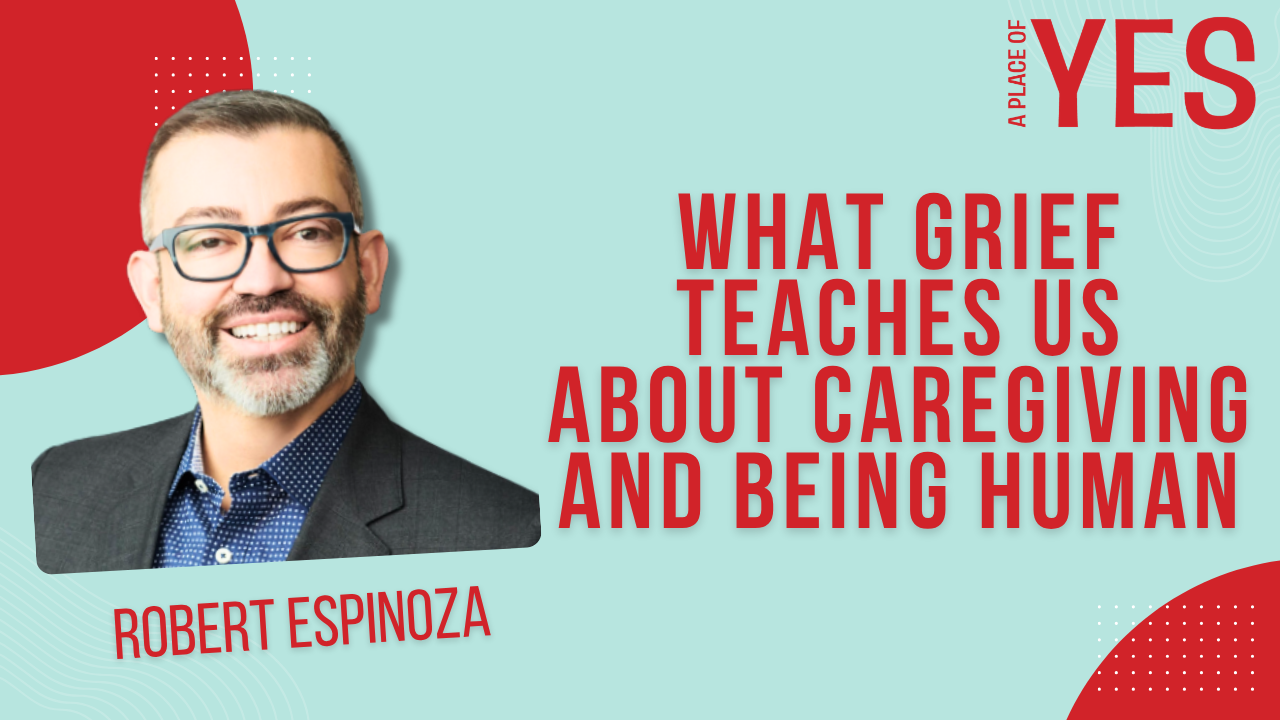
Watch the conversation on YouTube here.