

Founder’s Playbook
Strategic Communications
When impact outpaces visibility, organizations must step forward with clarity and purpose. Facing invisibility and harmful narratives, SAGE needed to claim a national voice and reframe how LGBTQ+ older adults were seen. Robert Espinoza, in partnership with his team, led a rapid transformation of its communications and advocacy—expanding reach, strengthening narrative, and positioning SAGE to lead with confidence and vision.
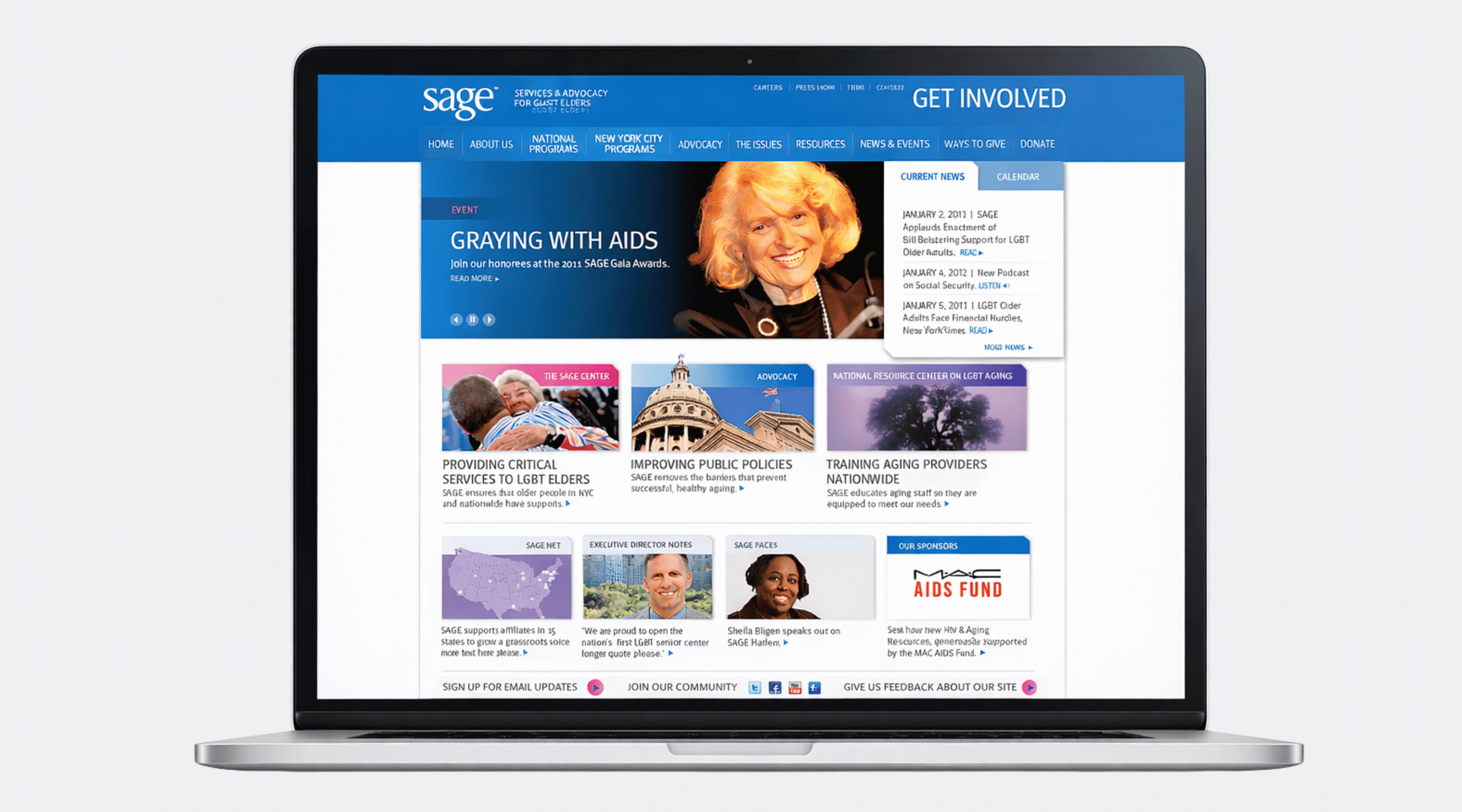
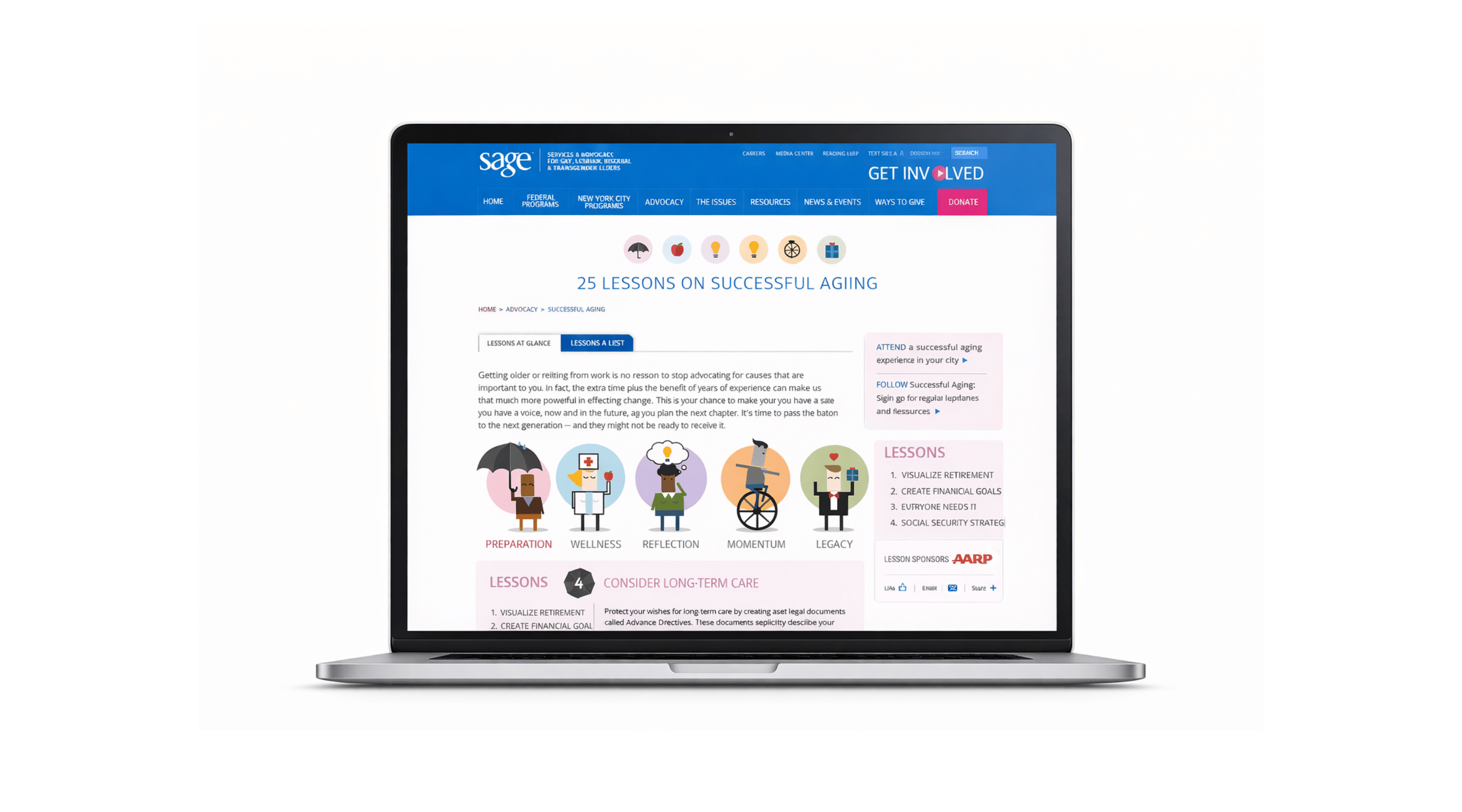
Design by RD Design; website by Chadwick Cipiti, with images courtesy of SAGE – Advocacy & Services for LGBTQ+ Elders.
Designing What Comes Next
-
Moving from invisibility and shame to a narrative that embraced difference. For too long, LGBTQ+ older adults were largely invisible in national conversations on aging. They were not a priority in federal or state policy discussions, and they were often overlooked within both the aging and LGBTQ+ fields. As SAGE expanded its work across New York City and the country, there was a clear gap between the scale of the need and the level of public understanding.
The few stories that did surface were often narrow or demeaning, reducing people’s lives to hardship without reflecting resilience, community, or possibility. There was an urgent need not just for more visibility, but for a stronger, more accurate narrative—one that could elevate LGBTQ+ aging as a national issue and support the organization’s growing impact.
-
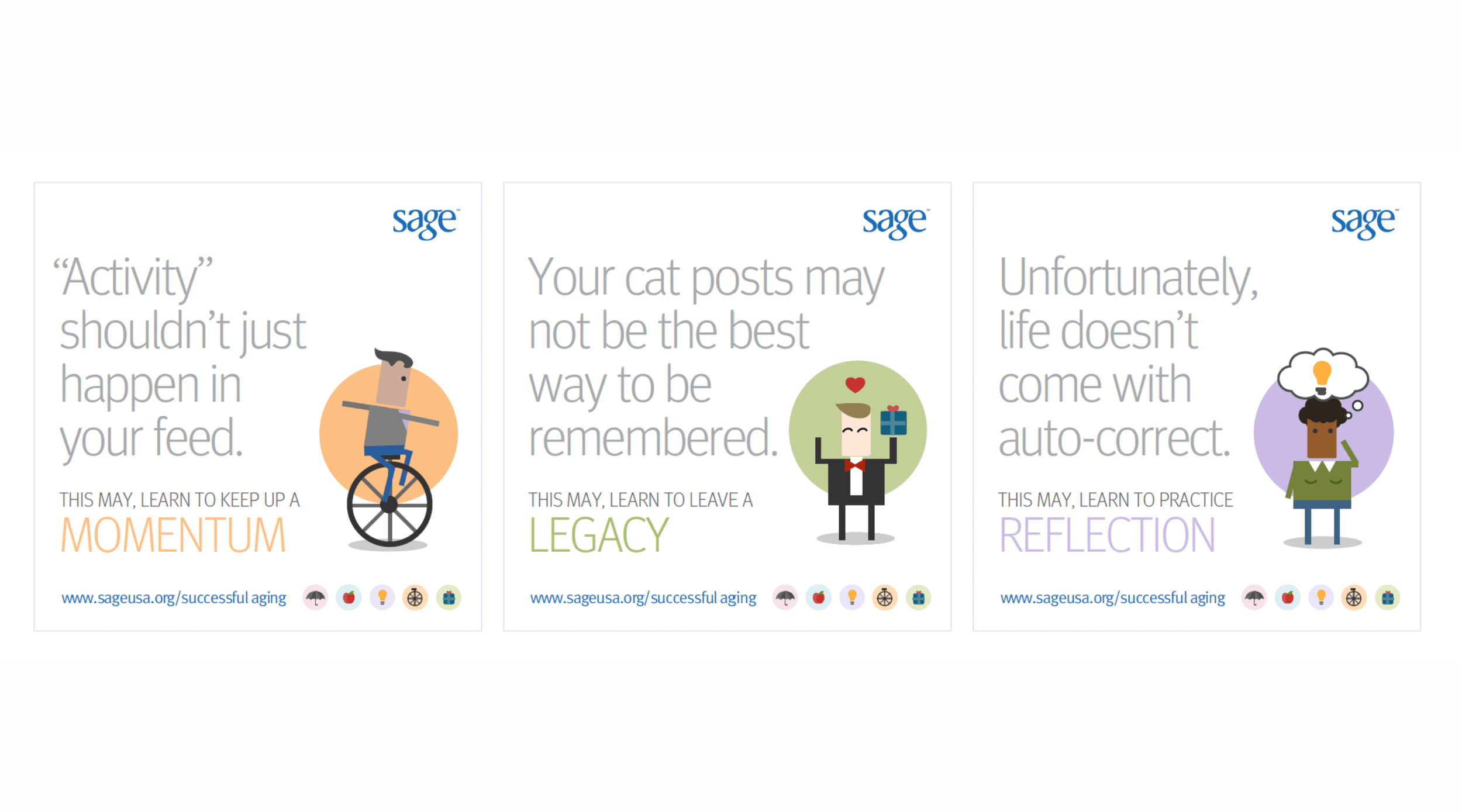
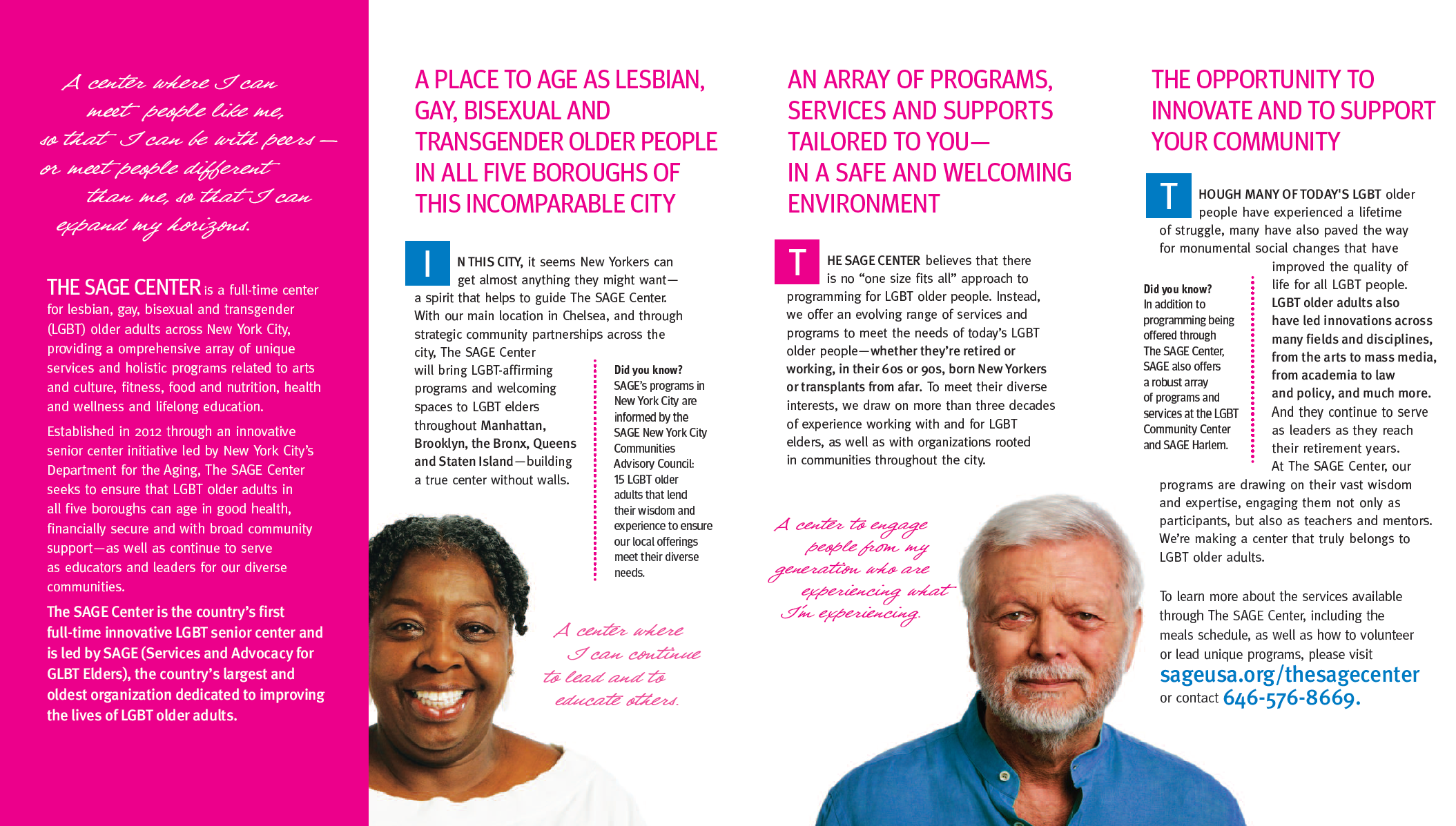
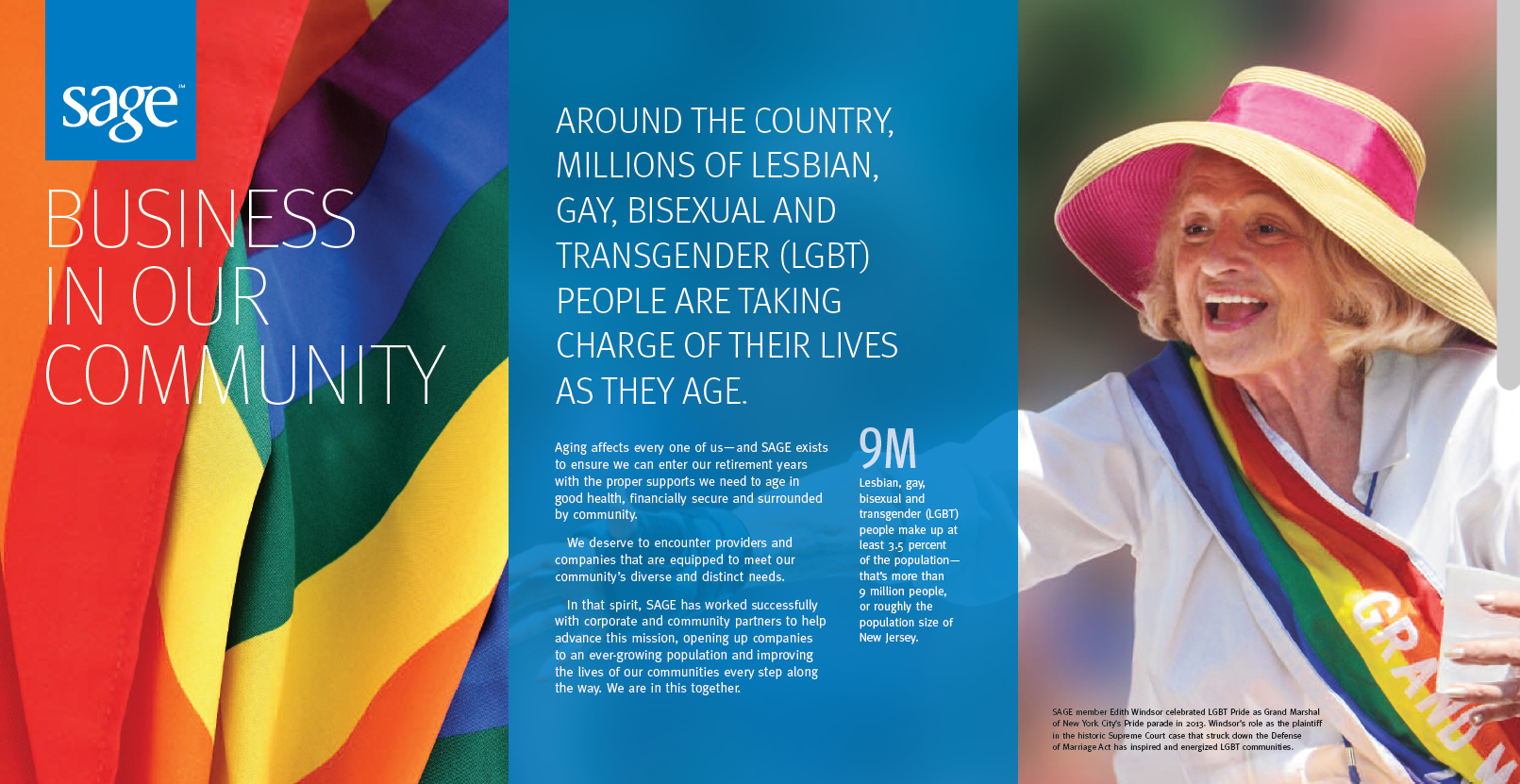
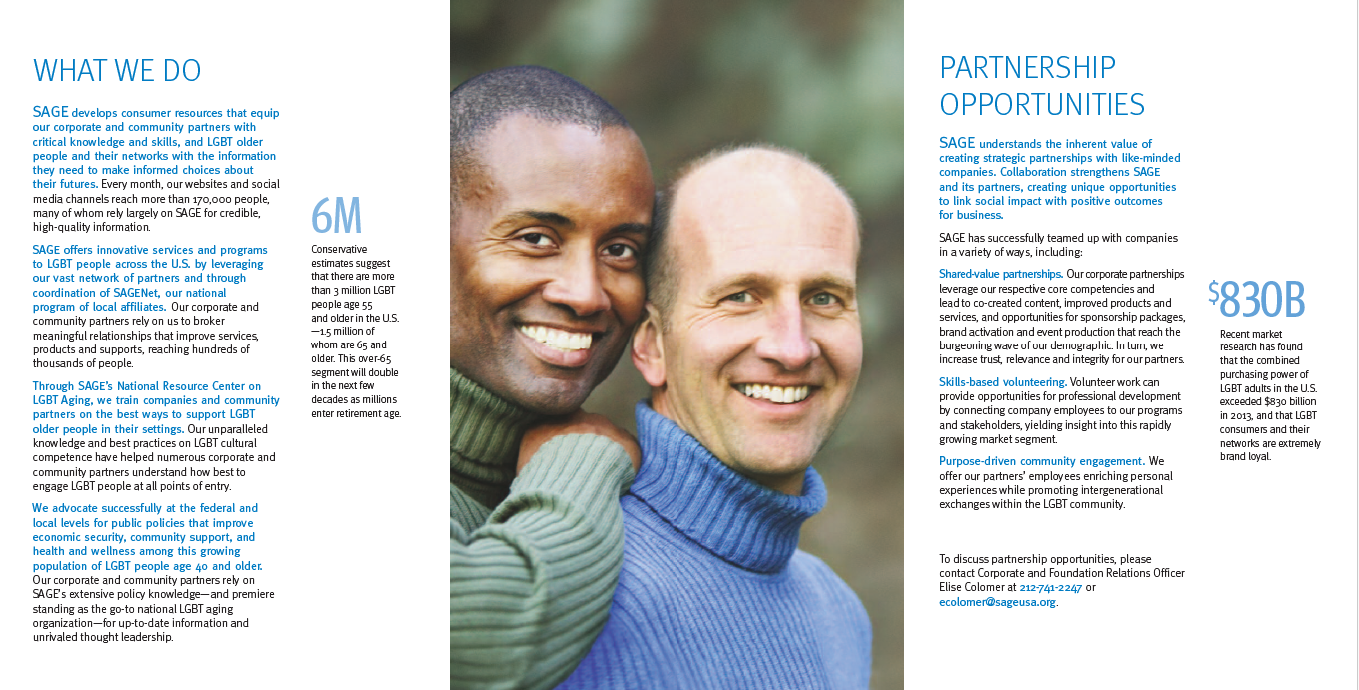
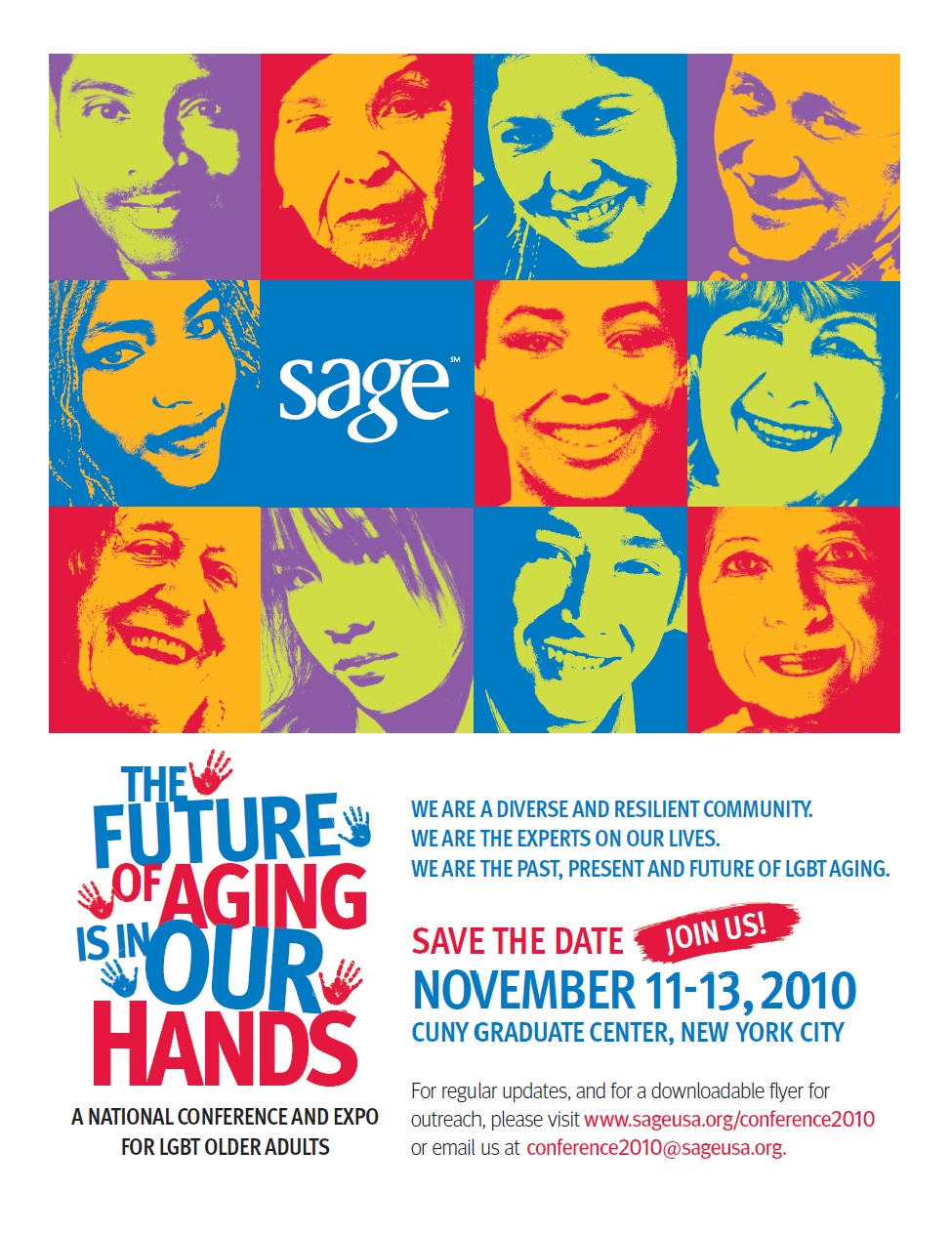
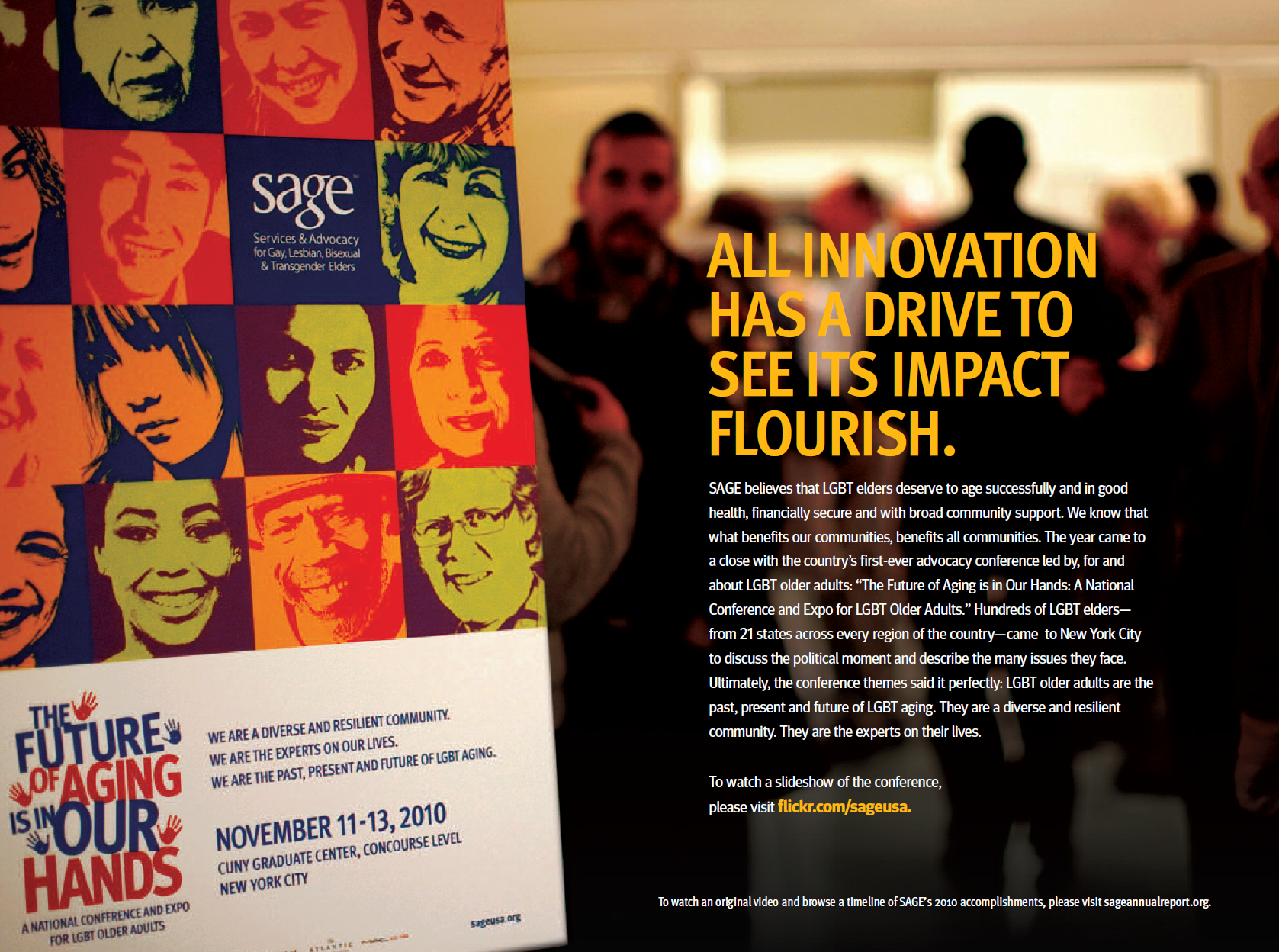
A comprehensive approach to storytelling and reach. Over several years, Robert oversaw a division spanning strategic communications and advocacy, working closely with a talented team to build a function that matched the breadth of SAGE’s work. Together, they developed an integrated approach that supported services, provider training, advocacy, and national partnerships—ensuring that every touchpoint reinforced a clear and consistent narrative about LGBTQ+ aging.
In partnership RD Design and Chadwick Cipiti on web development, SAGE launched a new website, refreshed core materials, and introduced sub-brands to reflect SAGE’s expanding programs. They expanded their reach through newsletters, social media, and earned media. They also established a steady stream of publications to engage policymakers, practitioners, advocates, and the public.
-
A different way of understanding the diverse aging experience among LGBTQ people—their needs, wisdom, and aspirations. This work transformed how SAGE showed up as a national organization. Communications became a central driver of visibility, credibility, and influence—recognized through a GLAAD Media Award, multiple Communicator Awards, and growing national media attention.
More importantly, it helped shift the narrative. LGBTQ+ older adults became more visible in public discourse, and the conversation began to reflect dignity, complexity, and possibility. By aligning communications with strategy and growth, we helped ensure that visibility translated into impact—and that the story being told matched the lives people were actually living.
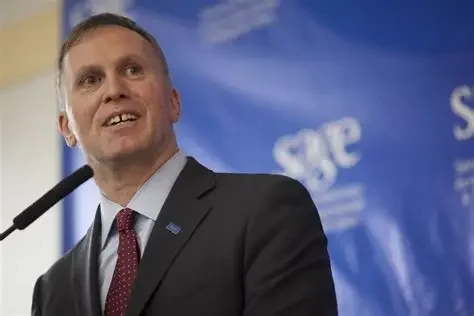
“Robert pairs deep policy expertise with exceptional strategic communications instincts. He knows how to translate complex aging and care issues into compelling ideas that move leaders, advocates, and the public to action.”
— Michael Adams, Former President and CEO, SAGE – Advocacy & Services for LGBTQ+ Elders, and Former Board Chair, American Society on Aging



“Robert has a rare combination of deep expertise on care policy and the high-level narrative and storytelling chops it takes to build demand for solutions to these important but challenging issues.”
— Nat Kendall-Taylor, PhD, Chief Executive Officer, FrameWorks Institute, a globally respected research organization advancing the science of narrative and strategic framing in social change.

Meet the Founder
Robert Espinoza is a nationally recognized workforce and care economy strategist and CEO of The CareWorks Project, partnering with leaders to redesign long-term care systems so people live with dignity, workers thrive, and communities prosper.